Three of Swords upright meaning
Upright, the Three of Swords names real pain honestly. A painful truth, a betrayal, or a loss has cut deep, and pretending otherwise will not help. This card does not sugarcoat grief — but it also does not leave you there. Let yourself hurt, name what happened, and know that honest grief is the first real step toward healing.
Ask about Three of Swords
Your first question is free, once per person. A reader may answer; an answer is not guaranteed.
Three of Swords reversed meaning
Reversed, the Three of Swords describes pain that is thawing, or pain you keep pressing on.
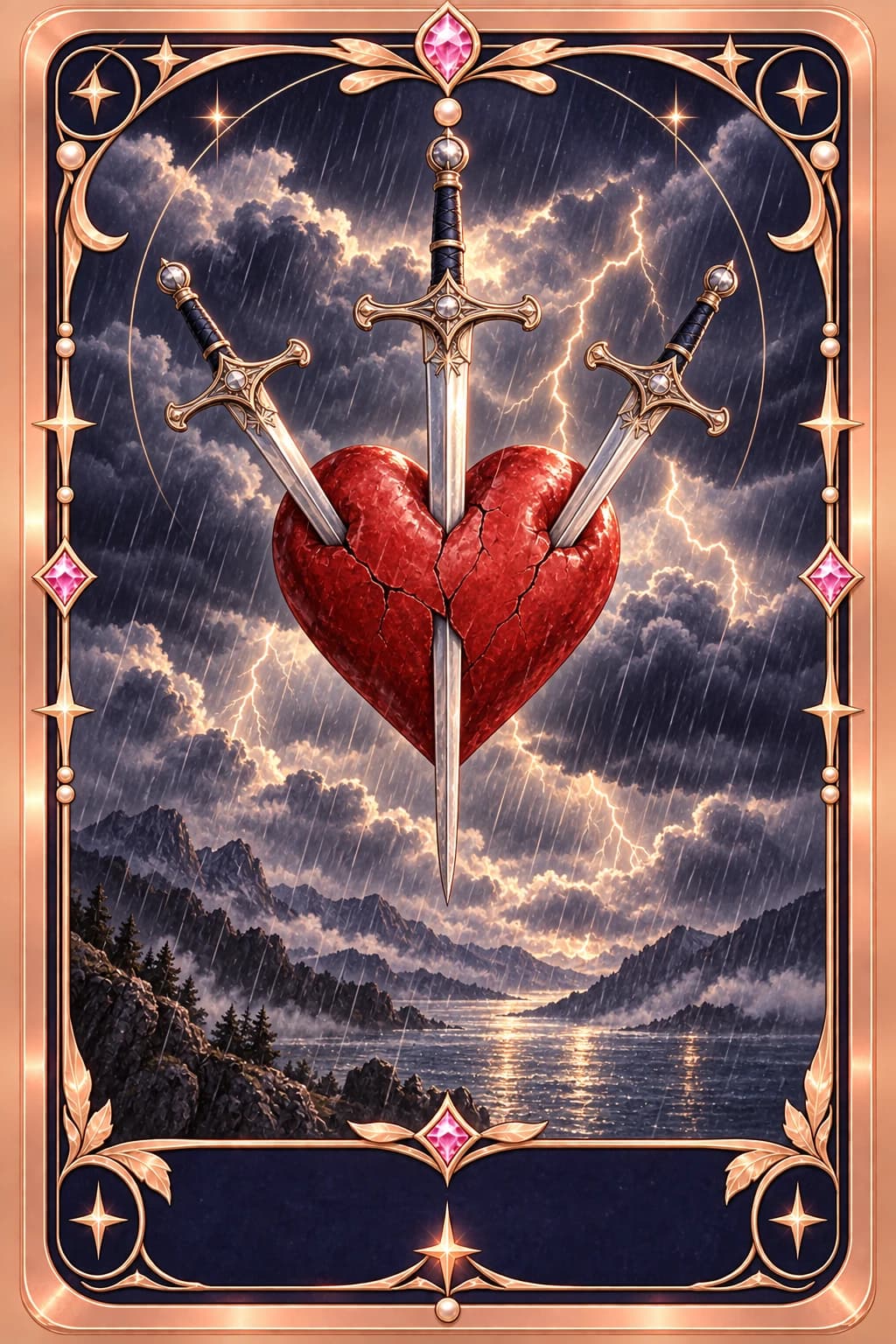
Turn the card upside down and the heart seems to slide free of the blades. In that spirit, the reversed Three often appears during recovery: the first calm afternoon after a rough month, a letter you finally stop rereading, a sense that forgiveness is at least imaginable.
It can also show the opposite habit. Some people replay the injury so often that it never closes, or they bury it so deeply that it leaks out as irritability. The reversal asks which of those is closer to your situation, without judging either one.
Healing is rarely a straight line, and this card does not promise a date. It describes a direction of travel. Small acts such as sleeping properly, saying a hard sentence out loud or taking a break from checking old messages are the kind of ordinary steps that the image seems to point toward.
Three of Swords yes or no
No: the Three of Swords answers a hopeful question with an honest, painful pause.
A red heart hangs in front of a rain-soaked sky, pierced by three blades. Nothing in the picture offers a bargain or a workaround. That is why the card reads as a no when the question is whether something will go the way you wished.
Treat that no as a description of a feeling or a pattern, not a sentence handed down about your future. The card often shows up when a disappointment is already real, and the question you are asking is partly an attempt to soften it. If so, the useful reading is that the hurt needs to be acknowledged before any new plan can be judged fairly.
Ask yourself what you already know and have been hoping not to know. Once the clouds clear, the same question can be asked again and may get a different answer.
Three of Swords in love
In love: the Three of Swords names heartache, whether recent or long carried.
Tarot readers see this card where words have landed badly, where trust has been bruised, or where someone has simply been left with grief. It can refer to a breakup, a third person, a truth that arrived too late, or a quieter sorrow inside a relationship that is still intact.
The card does not say who is at fault, and it does not predict that a relationship will end. It says the wound is real and deserves attention. Pretending nothing hurts usually prolongs the ache, while saying it plainly to a friend, a journal or the partner involved tends to take some of the weight off.
If you are single, it can point back to an old injury that still colors how you approach new people. Naming it is not weakness. It is simply the first honest step before deciding what you want next.
In career
In career and money, the Three of Swords can mean disappointing news, a lost opportunity, or painful feedback that stings but tells the truth. A project may end or a hope may fall through. Let yourself feel it briefly, then use the honest information to rebuild wiser and stronger.
Key facts
- Suit
- Swords
- Element
- air
- Rank
- Three
- Yes or No?
- NO
Frequently asked questions
Does the Three of Swords always mean heartbreak?
Not always, but it usually involves emotional pain of some kind — grief, betrayal, or a hard truth coming to light. The good news is that the Three of Swords also marks release. Facing the hurt honestly is what allows it to finally heal.
Is the Three of Swords a yes or no card?
The Three of Swords leans no, especially for questions about relationships or hopeful outcomes. It reflects sorrow and painful truth rather than the answer you wanted. Even so, it points toward healing once you allow yourself to grieve and move through it.
How do I heal after drawing the Three of Swords?
Start by letting yourself actually feel the pain instead of numbing it. Name what happened, be honest about the loss, and lean on people you trust. The Three of Swords heals through truth and time, not by pretending the wound is not there.
What does the Three of Swords mean reversed?
Reversed, the Three of Swords describes pain that is thawing, or pain you keep pressing on.
Want a personal reading of Three of Swords?
Independent psychic readers can interpret this card for your exact situation — love, career, and the decisions you are facing.
See available readers