- Love & Relationships
The Fool Tarot Card Meaning: Spontaneity and Taking Chances
About The fool card daily tarot meaning today I start with the fool card the card of spontaneous actions and taking chances

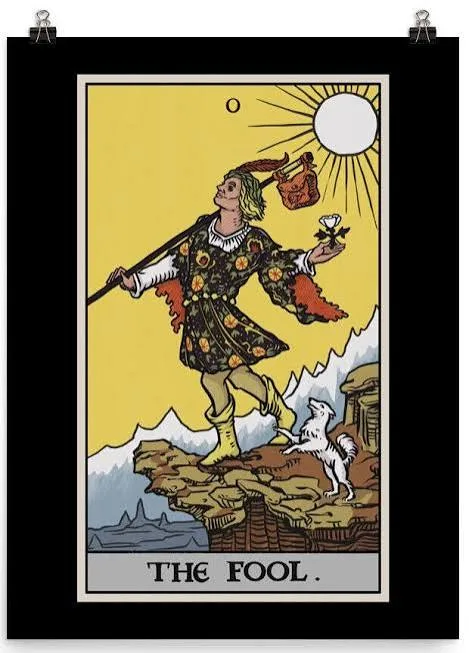
The Fool Tarot Card: Symbolism, Meanings, Intuition, and Modern Relevance
In the traditional structure of the Tarot deck, seventy-eight cards weave the narrative of the human experience. At the apex of this symbolic journey stands—or rather, steps—The Fool. Assigned the numerical value of zero, The Fool occupies a singular place in the Major Arcana. Zero is not merely nothingness; mathematically and esoterically, it represents the void pregnant with infinite potential, the unshaped cosmos before creation, and the unwritten slate of human consciousness. The Major Arcana traces "The Fool’s Journey," a metaphorical pilgrimage in which The Fool travels through life's trials, lessons, and spiritual milestones—meeting archetype after archetype—until arriving at complete self-actualization in The World card. To understand The Fool is to understand the quintessential spark of life itself: the unburdened spirit stepping into the unknown without fear, prejudice, or the heavy baggage of past conditioning. He is both the novice embarking on an unfamiliar path and the enlightened master who has cast off societal pretension to live in absolute authenticity.
In the ubiquitous Pamela Colman Smith imagery designed for the Rider-Waite-Smith deck, every visual element surrounding The Fool speaks to a profound psychological and spiritual dynamic. The Fool stands at the edge of a jagged cliff, one foot poised over the open expanse. Where a pragmatic observer sees imminent disaster, The Fool sees unlimited space. The cliff edge symbolizes the boundary between the known, comfortable reality and the vast, unmanifested realm of opportunity. Above him, a radiant white sun shines brightly, signaling divine favor, absolute clarity, and illumination. It suggests that the universe actively supports this step into the void, shedding light on a journey blessed by higher purpose. Prancing at his heels is a small white dog, acting simultaneously as a warning voice of physical safety and a manifestation of pure, loyal instinct. It represents intuition integrated with nature—a guiding force urging caution while remaining an eager participant in the adventure. On his shoulder, The Fool carries a small sack attached to a wooden wand or staff. The meager size of the knapsack illustrates his lack of worldly attachments and willingness to travel light. Inside lie all the unexpressed tools of the Magician, unopened and waiting to be utilized as the journey unfolds. Finally, in his left hand, he delicately holds a white rose, the universal emblem of innocence, spiritual purity, freedom from desire, and an uncorrupted heart.
Like a double-edged sword, The Fool’s willingness to walk into the unknown carries distinct meanings depending on whether the card appears upright or reversed in a reading. When appearing upright, The Fool is an unequivocal green light from the cosmos. It invites the seeker to embrace optimism, spontaneity, and radical open-mindedness. It marks the dawn of a new life chapter, career pivot, or creative undertaking where prior rules no longer apply. In relationships, it signals sweeping romance, fresh emotional starts, and the willingness to love without the defense mechanisms of past heartbreak. Culturally and psychologically, the upright Fool encourages a "beginner's mind"—releasing over-analysis, paralysis by analysis, and the desperate need to control outcomes. Upright, The Fool asserts that the risk of staying put in stagnant safety far outweighs the peril of leaping into the unfamiliar.
Conversely, when inverted, the open potential of The Fool collapses into its shadow aspects. The reversed posture generally manifests in one of two extremes: blind recklessness or paralyzing fear. In its reckless aspect, the reversed card signifies leaping off the cliff without checking if there is a bottom. It represents foolishness in its colloquial sense—careless behavior, ignored red flags, foolish gambling, and a total disregard for consequences. In its paralyzed aspect, the individual stands frozen at the cliff’s edge forever. Here, the person desperately longs for a fresh start but remains paralyzed by a fear of failure, imposter syndrome, or an obsessive demand for guaranteed outcomes before making a move.
At its core, The Fool is the ultimate archetype of intuitive living. In a modern culture that prioritizes hyper-rationality, empirical validation, and exhaustive planning, step-by-step logic often leads to decision-making paralysis. Logic analyzes what has been; intuition senses what could be. The Fool does not step off the cliff because he is ignorant of gravity; he steps off because his internal compass—his gut instinct—perceives a bridge invisible to the analytical mind. The companion dog running beside him represents this instinctual intelligence. Intuition operates faster than intellectual reasoning, pulling from subtle, subconscious environmental cues and spiritual resonance. To embody The Fool’s intuitive mastery is to cultivate radical trust. It requires honoring that sudden inner flash to start a business, make a life change, or walk away from a toxic environment, even when one cannot present a detailed, rational proposal justifying the choice.
Though rooted in ancient symbolism, The Fool offers an indispensable guide for navigating contemporary life. First, it serves as an antidote to perfectionism by encouraging the reclamation of the "beginner's mind." Modern society frequently punishes mistakes and demands instant expertise, but The Fool gives individuals permission to be beginners—to make mistakes, learn, and view failure not as a flaw in identity, but as crucial data collected along the journey. Second, The Fool offers liberation from societal expectations. Historically, the term "fool" denoted someone mocked by the court, yet the court jester was often the only person capable of speaking truth to power. Today, The Fool encourages individuals to stop performing for social expectations and algorithms, asking what one would attempt if they were completely unconcerned with whether others thought they were crazy. Finally, The Fool teaches surrender in an era of rapid technological shifts and global uncertainty. The attempt to control every variable of the future is an exhausting illusion. The Fool demonstrates that true security lies not in controlling external terrain, but in trusting one's inner capacity to navigate whatever terrain appears.
In conclusion, The Fool card remains one of the most transformative archetypes in the Tarot, holding up a mirror to the human relationship with trust, risk, and personal growth. It reminds us that every profound achievement, deep romance, and spiritual awakening in human history was once an uncertain leap into the unknown. When The Fool appears, it demands a choice: remain on the comfortable, predictable plateau of the status quo, or trust the quiet whisper of intuition, pack light, and take the step. The cliff edge is not where life ends; it is precisely where the true journey begins.
Comments0 comments
No comments yet. Say the first thing.