

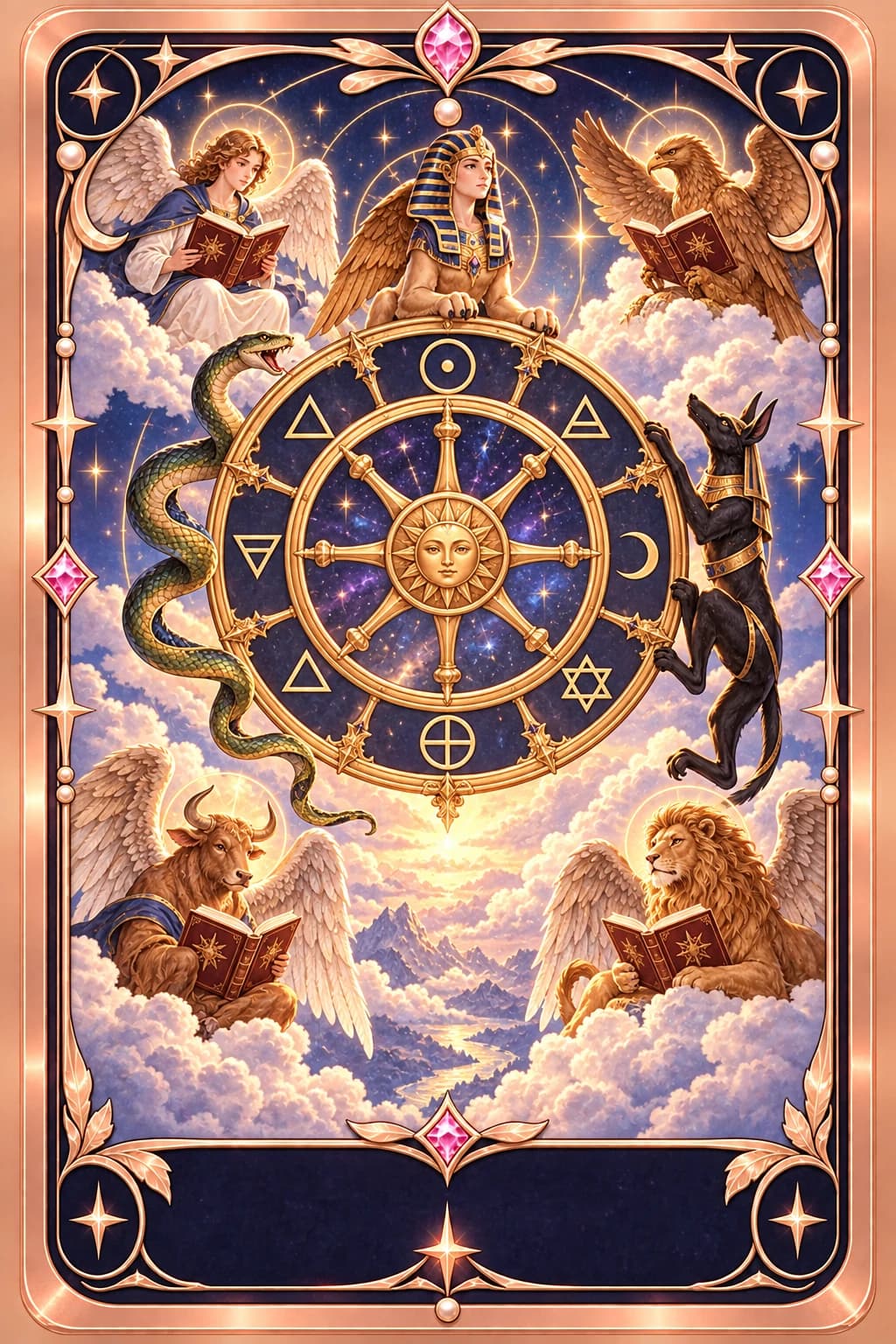
Guardian angels in Judaism and Christianity
The idea of an angel assigned to protect individuals grows from a few biblical lines. Psalm 91 says God will command his angels concerning you to guard you in all your ways. In Matthew 18:10, Jesus says of children that their angels in heaven always see the face of his Father. Early Christian writers, and later Jewish tradition, built on such verses.
The Catholic Church has no single defining dogma on the matter, but it teaches that each person is accompanied by an angel, and it keeps the Feast of the Guardian Angels on 2 October. Protestant traditions vary, and many are cautious about going beyond what scripture says. For believers the guardian angel is a pastoral comfort, not a fortune-telling service.
Guardian angels in Islam
Islamic teaching holds that every person is attended by angels. The Quran refers to protectors who watch over a person by God's command (13:11), and to noble recorders who know what you do (82:10-12). Tradition names the recording pair kiraman katibin, one noting good deeds and one noting wrong ones, while the protecting angels are called hafaza.
In this framework angels are created beings without free will to disobey, and the emphasis falls on accountability and protection rather than on personal messages. Muslims do not generally address angels or ask them for favours, since prayer goes to God alone. That differs markedly from some modern practices of calling on angels by name.
Archangel vs angel: what is the difference?
'Angel' comes from a Greek word meaning messenger, and 'archangel' means chief angel. In scripture, only a few are named: Michael, Gabriel and, in some canons, Raphael. The word archangel appears rarely in the Bible itself, so much of the structure came later. Jewish and Christian writers ranked angels by function and closeness to God.
The best-known scheme is from Pseudo-Dionysius, a writer of about the fifth or sixth century, who arranged angels into nine choirs in three groups, with seraphim and cherubim nearest God and archangels and angels nearest humanity. It is a theological model, not a geography of heaven, and other traditions rank things differently. Popular books often add details that none of these sources contain.
Michael, Gabriel, Raphael and Archangel Uriel
Michael appears in Daniel and Revelation as a protector in conflict, Gabriel brings announcements to Daniel and Mary, and Raphael guides Tobias in the Book of Tobit, which Catholic and Orthodox Bibles include and Protestant ones do not. These three are named in the traditions that read these books, and they are the archangels most widely honoured.
Uriel, meaning 'God is my light' or 'flame of God', is named in the Jewish text 1 Enoch and as a teacher in 2 Esdras. Neither is in the Protestant canon. In 745 a council in Rome under Pope Zachary condemned a preacher who invoked Uriel and other names, and ruled that only the scriptural three should be named in prayer. Uriel survives in Eastern and Ethiopian tradition, in Milton, and in New Age writing, where he is linked with wisdom.
Earth angel meaning and guidance angel meaning
'Earth angel' is a modern New Age term for a person said to have an angelic soul in human form, often someone unusually kind, empathic or drawn to helping. It is not found in scripture or traditional theology. The phrase spread through spiritual books in the 1990s and 2000s, including those of Doreen Virtue, who in 2017 announced she had left her New Age work and returned to Christianity, warning against it.
'Guidance angel' has no fixed meaning either. People use it to mean a guardian angel, a spirit guide, or a sense of being steered at a hard moment. If someone tells you that you are an earth angel, you can take it as a compliment. It is a label, not a diagnosis of your soul, and it does not explain your life or predict it.
Feathers and angels: what do people say a feather means?
A popular modern belief holds that finding a feather, especially a white one or in an unexpected place, is a sign that an angel or a loved one who has died is near. The idea circulates widely online and in grief support groups, and it is often tied to a recent loss or a moment of worry. It is not part of any official religious teaching.
Feathers are, of course, common: birds moult constantly, and wind carries feathers into odd corners. Many people take comfort from the reading anyway, and that comfort is real even if the cause is ordinary. A fair view is to enjoy the meaning you give it, without treating a feather as news about your future or a reason to make a big choice.
Frequently asked questions
Does everyone have a guardian angel?
Catholic teaching says yes, citing Matthew 18:10 and Psalm 91, and Islamic tradition describes protecting angels for everyone. Other traditions are less specific, and there is no scientific evidence either way. For believers the idea is a comfort and a reminder to live carefully, not a guarantee that nothing will go wrong.
How is an archangel different from an angel?
Archangel means chief angel. In the scheme of Pseudo-Dionysius, archangels rank near the bottom of nine choirs and are concerned with important messages to humanity, while angels handle everyday matters. Scripture names only a few. The ranking is a theological model, and different religions arrange angels differently or not at all.
Why was Archangel Uriel removed from veneration?
In 745 a Roman council under Pope Zachary condemned the cleric Aldebert for invoking angel names not found in the accepted scriptures, and Uriel was among them. The Church limited public veneration to Michael, Gabriel and Raphael. Uriel remains honoured in some Eastern Orthodox and Ethiopian traditions and is popular in modern spiritual writing.
What does 'earth angel' really mean?
It is a modern label for someone seen as especially caring, supposedly carrying an angelic soul. It comes from New Age books, not from scripture or traditional theology. If you hear it, take it as warm language. It does not describe a verifiable fact about you, and it does not tell you what to do with your life.
Does finding a white feather mean an angel is near?
Many people say so, and some find real comfort in the thought, particularly after a bereavement. It is a popular modern belief rather than religious doctrine, and feathers have natural explanations. You are free to treat one as a gentle moment of remembrance, while keeping your decisions grounded in practical considerations.
Talk it through with a reader
Some FateArc readers specialise in spiritual guidance and will discuss what this belief means to you, without pretending it is settled fact.
Browse spiritual guidance readers