Change is an Open Gate That's Sometimes Needed
In the tarot, all of the cards can be read as some type of change. But The Tower is famous for instilling fear. But why though?
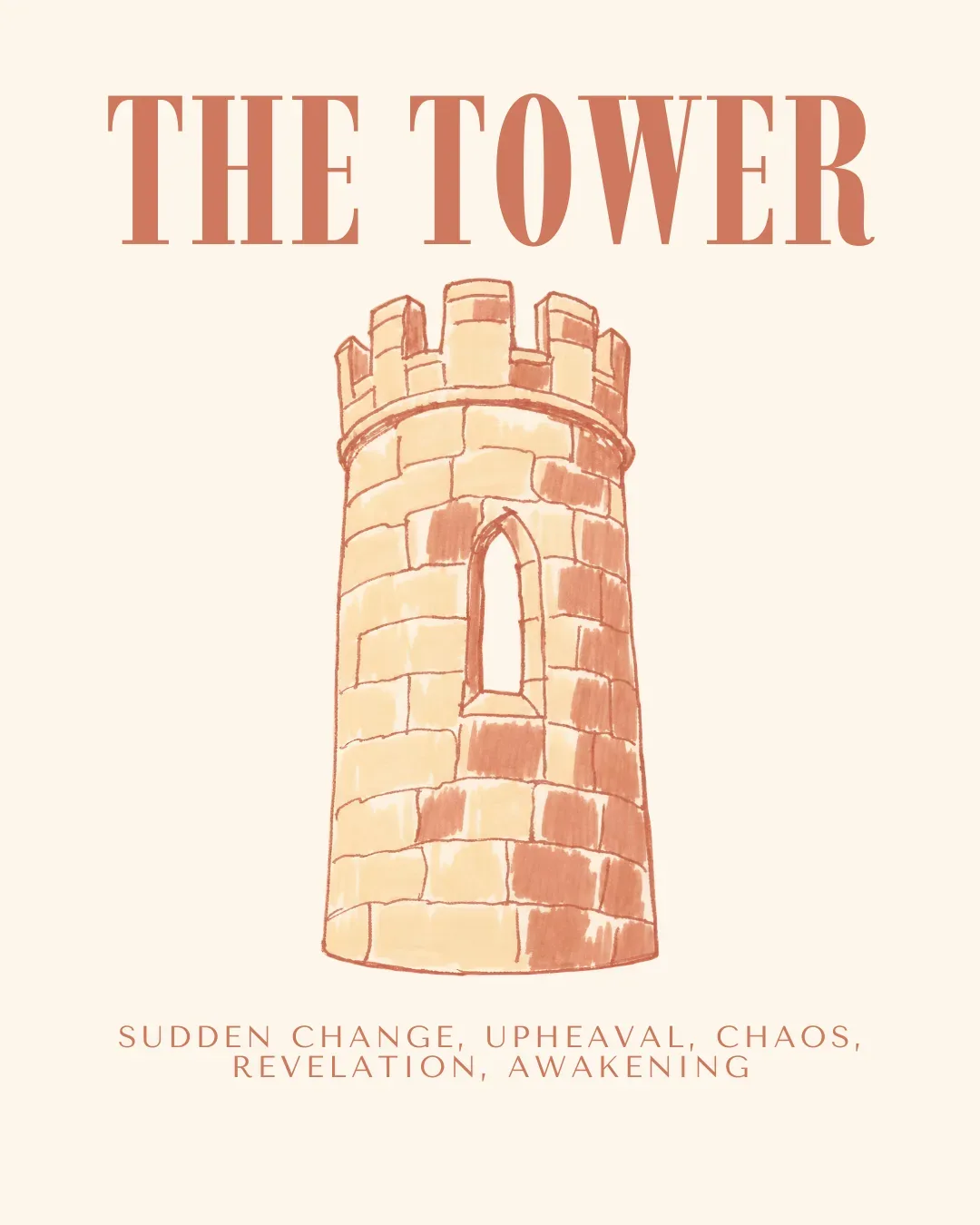
If you've pulled The Tower in a reading recently, take a breath. I know how that card lands — the crumbling stone, the lightning bolt, the two figures falling through the air. It's easy to see it and brace for impact. But after years of sitting with this card, I've come to think we've got its reputation a little backwards.
Als Nächstes: ein kostenloses Konto, damit dein Berater weiß, wohin die Antwort soll.
Deine Frage geht zuerst an diesen Berater und bleibt für andere verifizierte Berater sichtbar, bis jemand sie annimmt. Sobald jemand antwortet, bleibt es zwischen euch beiden. Sie wird nie veröffentlicht.
The Tower is the tarot's shorthand for sudden, sweeping change — the kind that arrives too fast to prepare for, and sometimes too fast to even fully process in the moment. It's the breakup you didn't see coming, the job that ends without warning, the plan that collapses the week before it was supposed to happen. When it shows up in a spread, it can feel less like guidance and more like a warning siren.
Of all the cards in the deck, it's the one most likely to make someone's stomach drop before the reading even continues. And I get why — visually, it's the most violent image in the whole deck. Fire. Falling. A structure that took years to build, gone in a single frame. Nobody wants to hear that's what's headed their way. But the intensity of the image is exactly why it's worth slowing down on, instead of flinching away from.
But here's the thing about sudden change: we've all lived through it before, more than once, and yet we're still here. Think back to the last time your life rearranged itself without asking permission. It probably didn't feel good while it was happening. But did something good eventually come of it — or did you, somewhere along the way, make something good come of it? For most of us, the answer is yes. Not because the universe balances the books, but because we adapt, we rebuild, and we tend to rebuild stronger than before.
That's really what The Tower is pointing at. It's not a verdict that your life is falling apart — it's a signal that something was already unstable, and it needed to come down before it could be replaced with something sturdier. Old walls get weathered. Foundations settle and crack. Structures we built for a version of ourselves we've since outgrown start to strain under who we are now. The Tower doesn't cause that instability — it just marks the moment it finally gives way.
So when this card turns up, the most useful thing you can do is look past the rubble to what comes after. What wants to be rebuilt here? What foundation would actually hold you this time — one that's steadier, more honest, more yours than the one that just came down? The present moment might feel disorienting and unfamiliar right now, but that feeling doesn't last. Give it time, and this chapter will feel as familiar and survivable as every other big shift you've already lived through. That's not wishful thinking — that's just how change tends to work, if you let it.
Think about it in practical terms for a second. The relationship that ended abruptly may have been propping up a version of you that was already quietly exhausted from the effort. The job that vanished overnight might have been keeping you tethered to a routine you'd outgrown two years ago but never let yourself admit. Even the changes that hit us financially, physically, or within our families — the ones that feel the most senseless in the moment — tend to reveal, with enough distance, a structure that was no longer serving the person we'd become. The Tower rarely tears down something solid. It tears down something that was already hollow, and asks us to stop pretending otherwise.
None of that makes the fall painless. Sitting in the rubble of a Tower moment is genuinely hard, and it's fair to grieve what came down, even if you can already sense it needed to. What tends to help is resisting the urge to rebuild immediately, out of panic, using the exact same blueprint. Give yourself a beat. Notice what actually cracked, and why. Ask what you'd build differently if nobody were watching and nothing was on the line. The rebuild that follows a Tower moment tends to go better when it's deliberate rather than reactive.
The Tower asks something hard of us: to trust the fall enough to see what it's clearing space for. That's not always an easy thing to sit with alone, especially when the card lands during a moment that already feels shaky, and especially when it's hard to tell, from the inside, whether you're looking at wreckage or at ground being cleared.
If you're navigating a Tower moment of your own and want a second set of eyes on what's actually shifting — and what it might be opening up for you — that's exactly the kind of reading rb_arcana was built for. Whether you're looking for clarity on what just fell apart or guidance on what to build in its place, a reading can help you separate the shock of the moment from the shape of what's coming next. Sometimes it just helps to have someone walk through the cards with you.
The walls came down for a reason. Let's find out what they were making room for.
Berater
Loading comments…